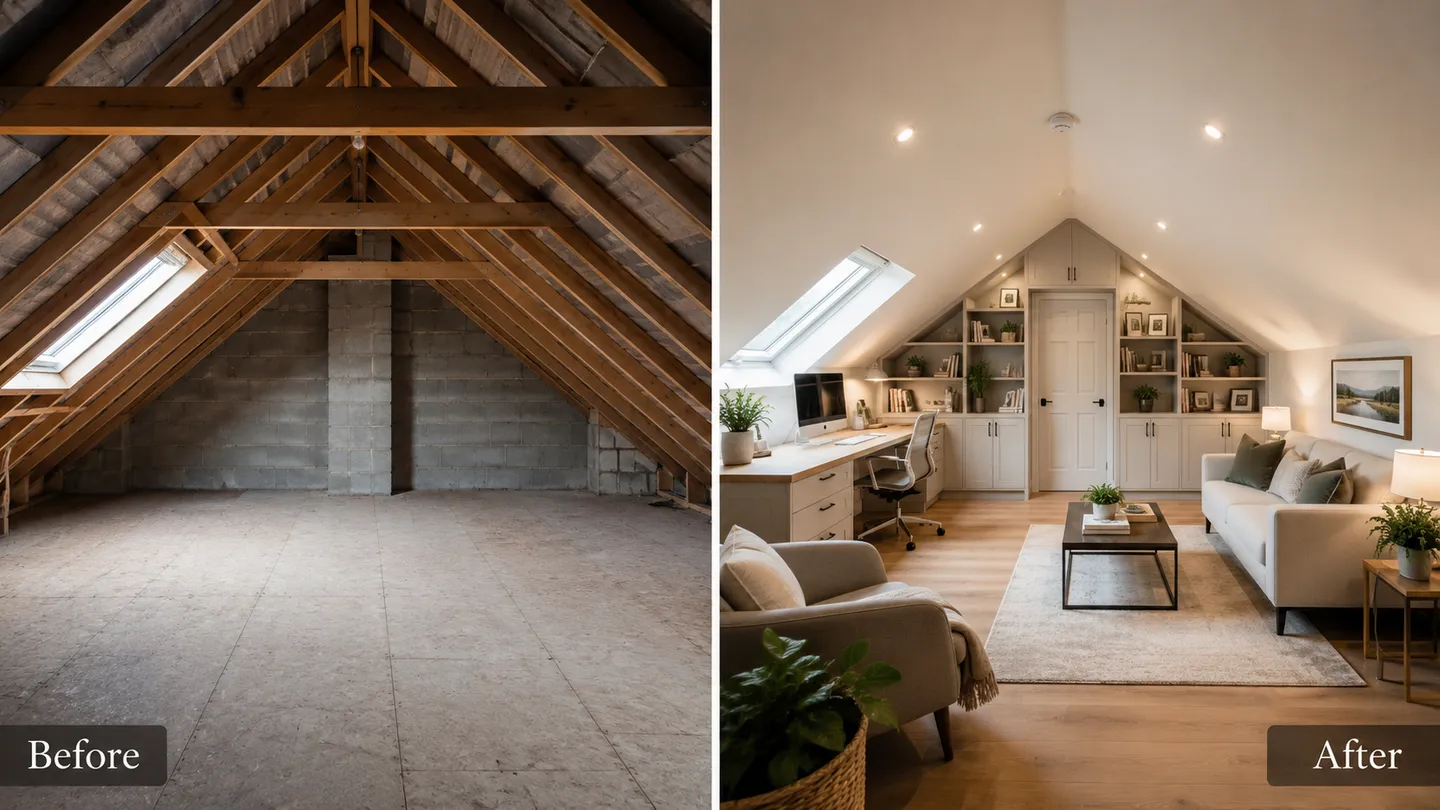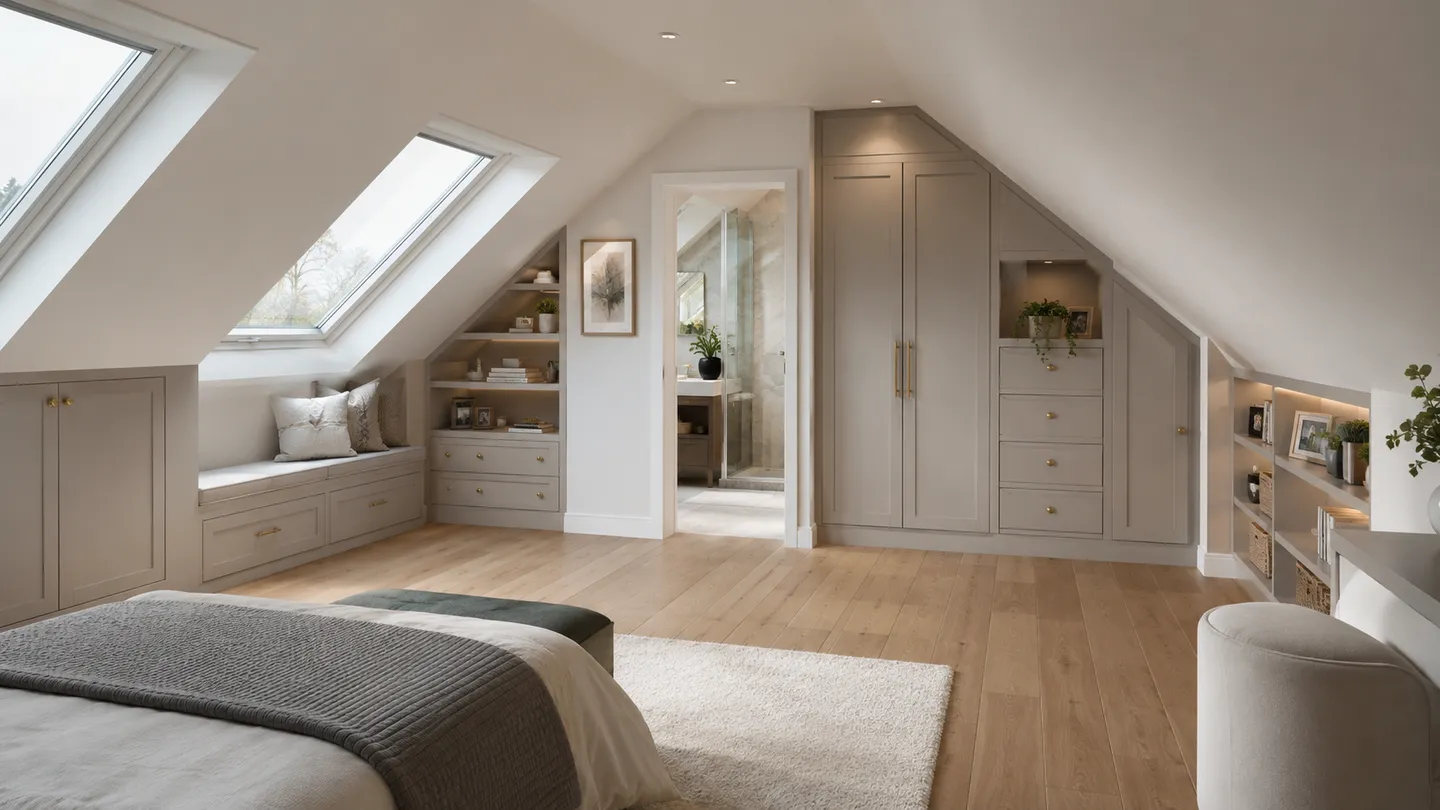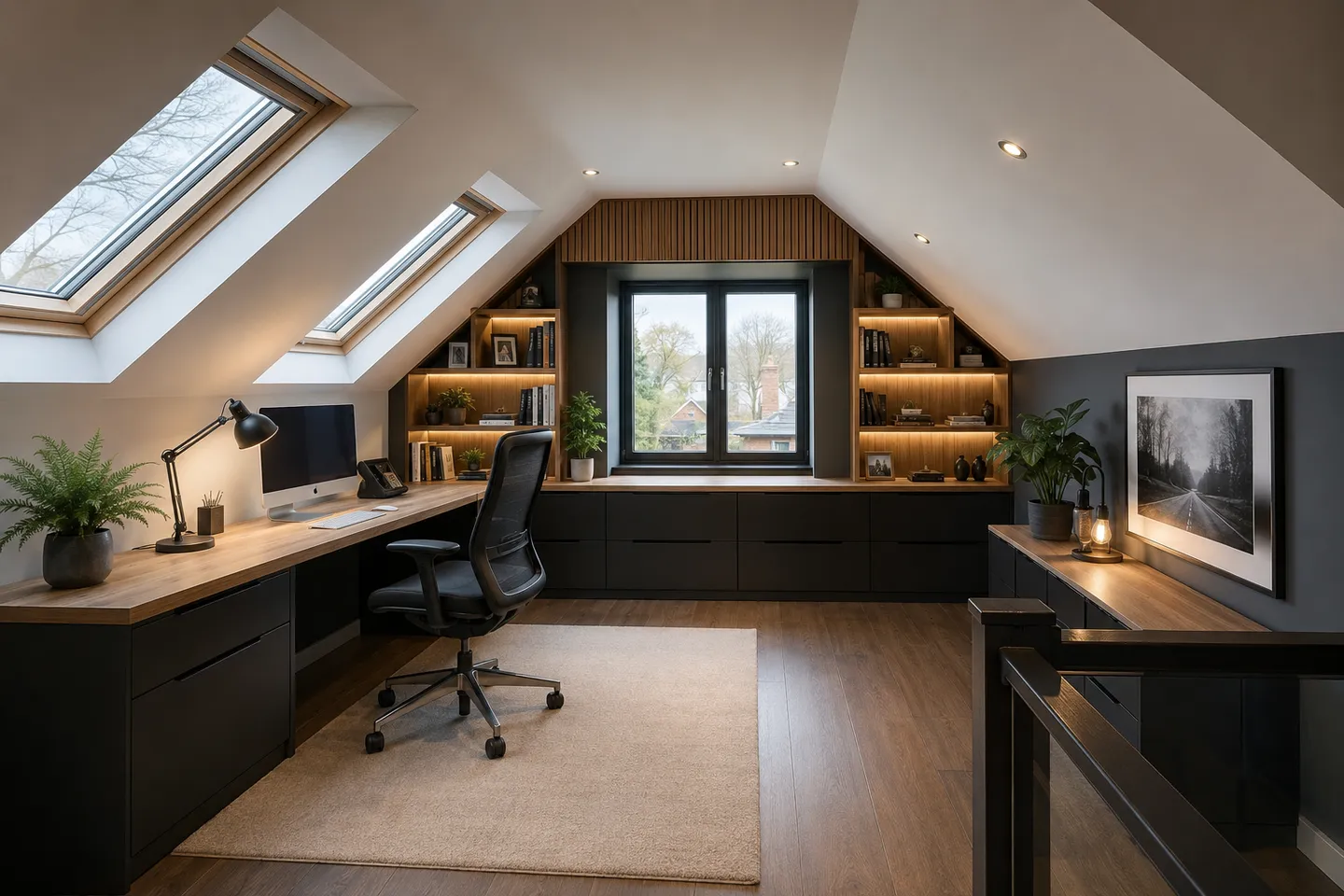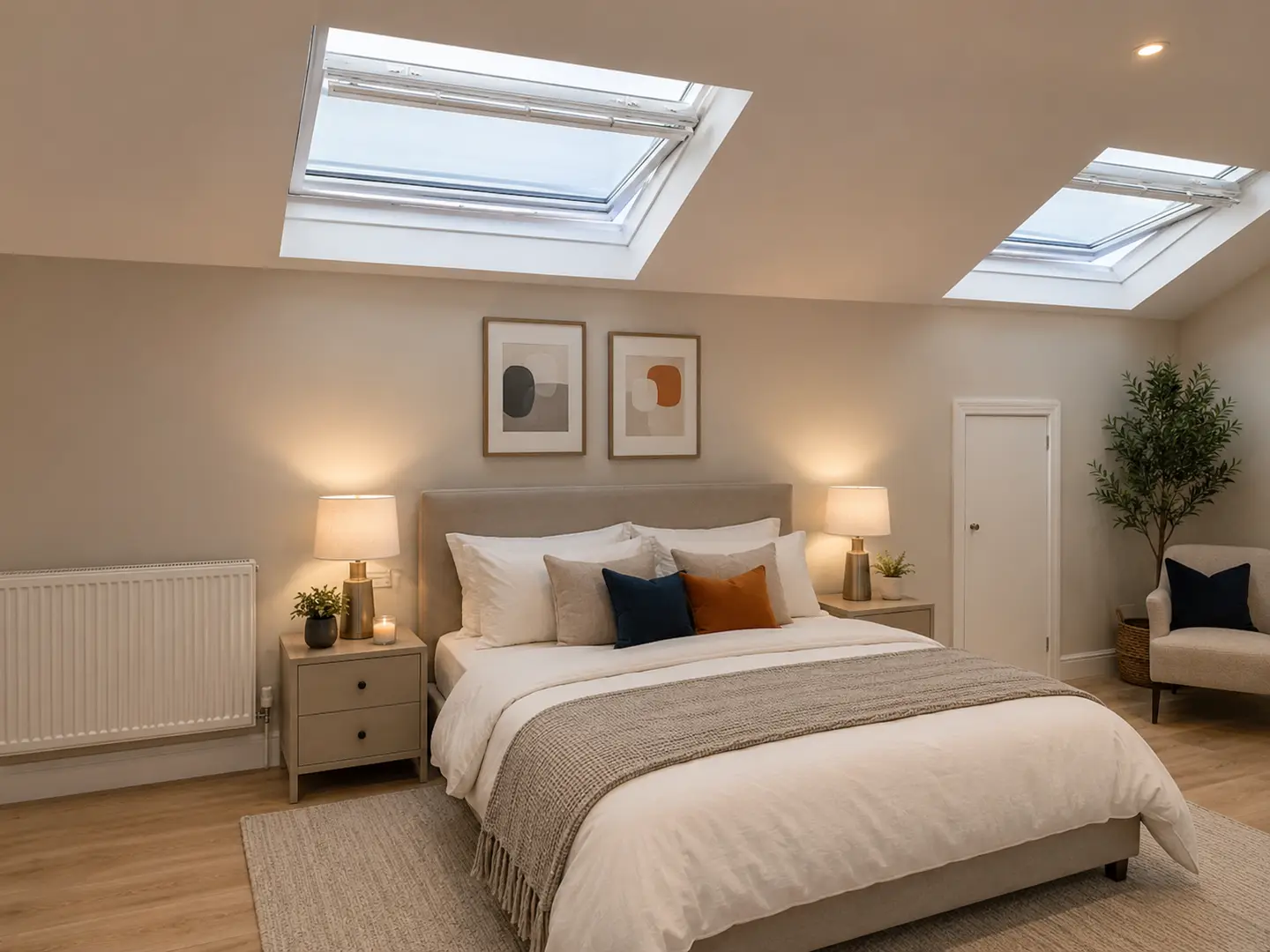
The question every Meath homeowner should ask first
Before you spend a euro converting your attic, there is one question that matters more than the colour of the skylights or the style of the storage units: can you legally call the finished room a bedroom? It sounds like a technicality. It is not. In Irish building regulations the difference between a habitable room and a non-habitable room changes what you are allowed to build, what it costs, and what you can honestly tell a buyer when you sell.
This is the post where we tell you the part that the “from only” advertisements leave out. We would rather lose a quote than hand you a room you cannot stand over at resale.
Why an attic room is treated differently to a normal room
A standard Irish house is usually two storeys. The moment you make an attic room habitable, you are no longer adding a room: you are adding a third storey. That single classification triggers a cascade of building regulation requirements that a simple storage loft never has to meet.
Once a third storey exists, the Building Regulations expect you to satisfy several parts at once:
- Part B (Fire safety): a third storey changes escape routes, often requiring a protected stairway, fire doors and mains-wired interlinked alarms.
- Part K (Stairs and ramps): the new stairs must meet rules on pitch, going, rise and headroom. This is where many conversions fall down, because a compliant staircase eats floor space the attic cannot always give back.
- Part L (Conservation of fuel and energy): insulation in the roof, walls and floor must meet current thermal standards.
- Part F (Ventilation): a habitable room needs adequate background and purge ventilation, not just an opening rooflight.
- Part E (Sound): the new floor must control sound transfer to the rooms below.
None of these apply with the same force to a non-habitable storage space. That is the whole point of the distinction, and it is why the two words carry so much weight.
What actually makes a room habitable
A habitable room is one intended for living in: a bedroom, a living room, a study, a home office where someone spends sustained time. A non-habitable space is for storage, occasional access or services. The line is drawn by whether the space can lawfully and safely be occupied for living, and that comes down to a handful of practical factors.
Head height and usable floor area
The single biggest limiting factor is head height. A pitched roof gives you a triangle of space, and once you account for the stairs, the structure and the insulation build-up, the area with genuine standing height can shrink dramatically. If too little of the floor has adequate height, the room cannot reasonably function as a habitable room, however nicely it is finished.
A compliant staircase
A habitable third storey needs proper, permanent stairs that meet Part K, not a steep ladder or a pull-down stair. Fitting those stairs takes space from both the attic and the floor below, and on many Meath houses there simply is not room to do it without compromising a landing or a bedroom underneath.
Fire safety, light and ventilation
A habitable room needs a safe means of escape in a fire, adequate natural light and proper ventilation. Add these to the head-height and stair limits and you can see why, in practice, a large share of real attic conversions legally remain non-habitable. They are excellent rooms. They are just not, in the eyes of the regulations, bedrooms.
Why honest builders say “non-habitable”
Here is the uncomfortable bit. A builder can convert almost any attic into a warm, bright, lovely-looking room. What a builder cannot do is rewrite physics or the regulations. When the head height or the staircase will not allow a compliant habitable room, the honest answer is to call it what it is: a non-habitable attic room, a studio, a hobby space or storage with a finish you will actually enjoy.
Calling it a fourth bedroom when it does not qualify is not a favour to you. It is a problem you inherit later.
Estate agents and the Society of Chartered Surveyors Ireland (SCSI) regularly caution that a converted attic should only be described as a bedroom where it genuinely meets the standards for a habitable room. A space marketed as a bedroom that does not qualify can be challenged at survey and valuation.
How this burns buyers at resale and mortgage stage
Imagine you buy a house advertised as four bedrooms, one of them in the attic. Years later you sell. The buyer’s surveyor inspects the attic room, finds the head height short and the stairs non-compliant, and reports that it is not a habitable bedroom. Suddenly the house is a three-bed with a study. The buyer’s lender may value it accordingly, the sale can stall, and the price conversation gets difficult.
The same issue surfaces at mortgage stage on the way in. Lenders rely on valuations, and valuers rely on what the room legally is, not what the brochure says. This is precisely why we never imply an attic is a legal bedroom without the habitable-room qualifier, and why we put the classification in writing before work starts.
Certification is what protects you
Whether your conversion is habitable or non-habitable, proper paperwork is the homeowner’s insurance policy at resale. For a habitable third storey in particular, the process should include:
- A Commencement Notice lodged with the local authority before work begins.
- Engineer or assigned certifier involvement, with design and inspection appropriate to the works.
- A Certificate of Compliance on completion, confirming the works meet the relevant Building Regulations.
When a future buyer’s solicitor asks for evidence that the attic was done properly, that file is what closes the gap. Without it, even a genuinely compliant room can look risky on paper and slow your sale down.
If you are weighing up the rules around going up a storey, our guide to planning permission for attic conversions in Meath explains when you need it and when an exemption may apply, and our overview of the attic conversion process from survey to sign-off walks through how certification fits into each stage.
So, can you legally call it a bedroom?
Sometimes yes, when the head height, stairs, fire safety, insulation, ventilation and sound all stack up and the certification is in place. Often, in real Meath houses, the honest answer is that you get a superb non-habitable room rather than a legal bedroom. Both outcomes can be brilliant. Only one of them is a bedroom, and you deserve to know which one you are buying before the work starts.
If a genuine, certifiable bedroom is your goal, it pays to check feasibility early. Our pages on attic bedroom conversions and whether your attic is suitable show what we look for on a first visit.
Get an honest assessment, free
We will measure your attic, tell you plainly whether a habitable bedroom is realistic, and explain the certification you would need either way. No “from only” headline, no pressure, just a straight answer you can plan around. Book your free attic assessment and find out exactly what your space can legally become.