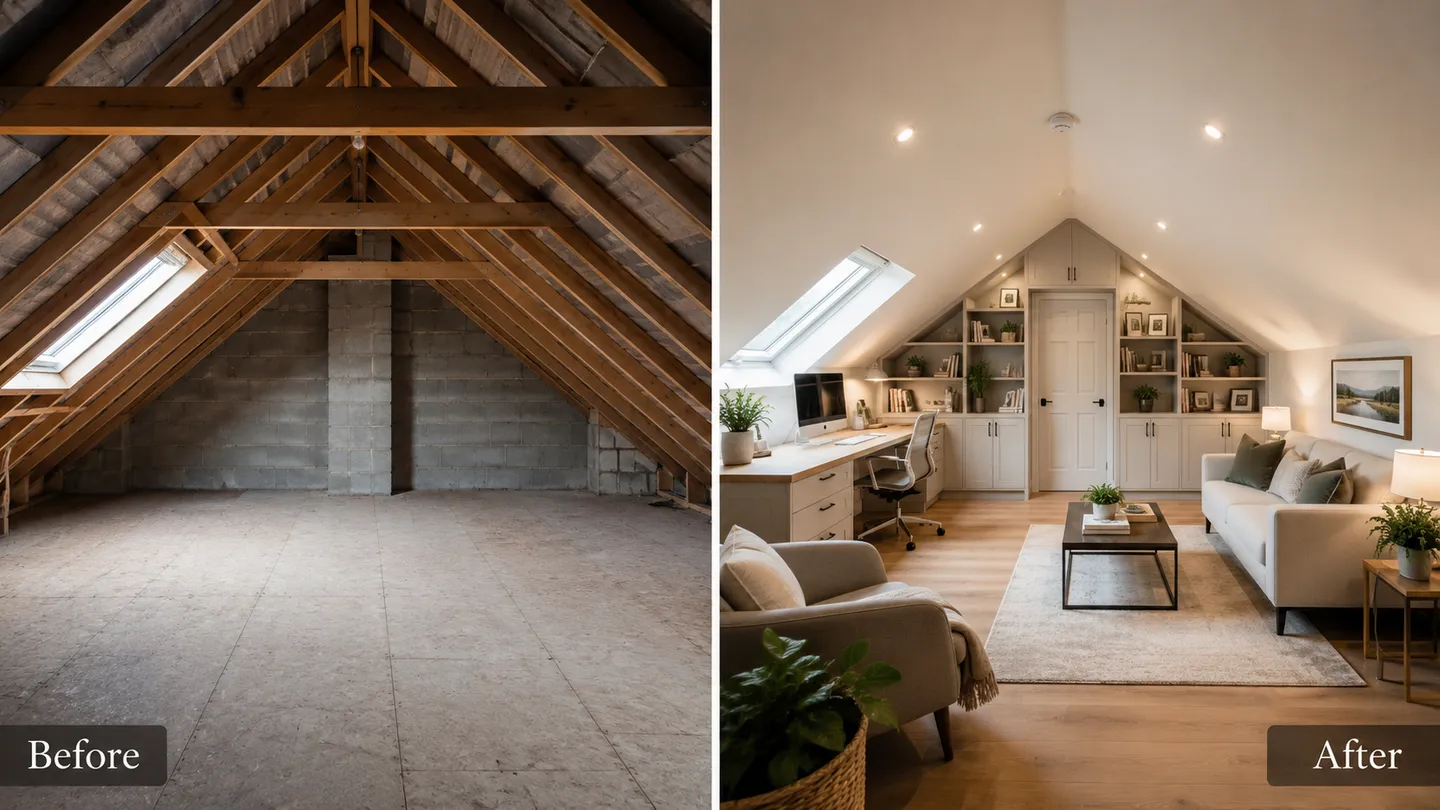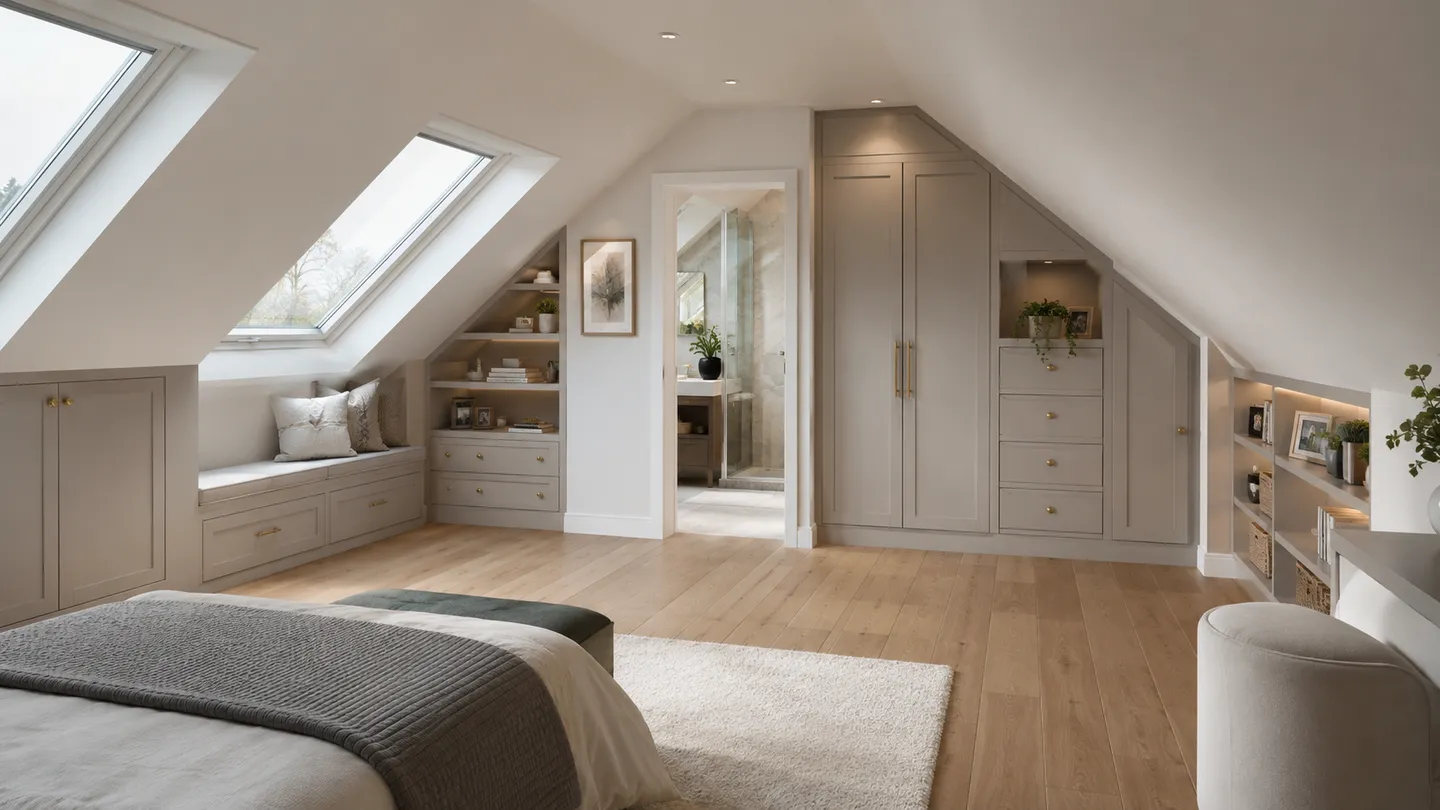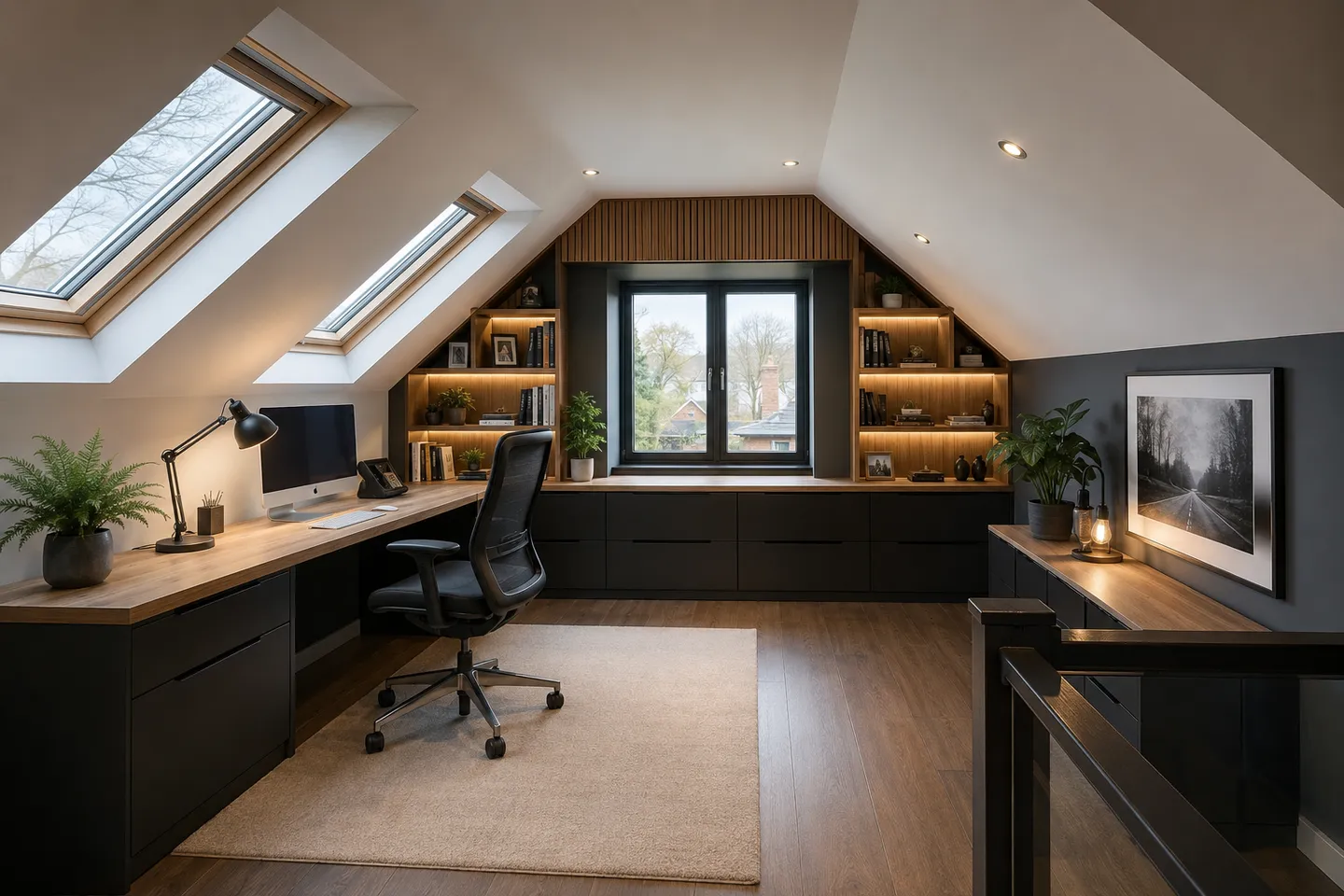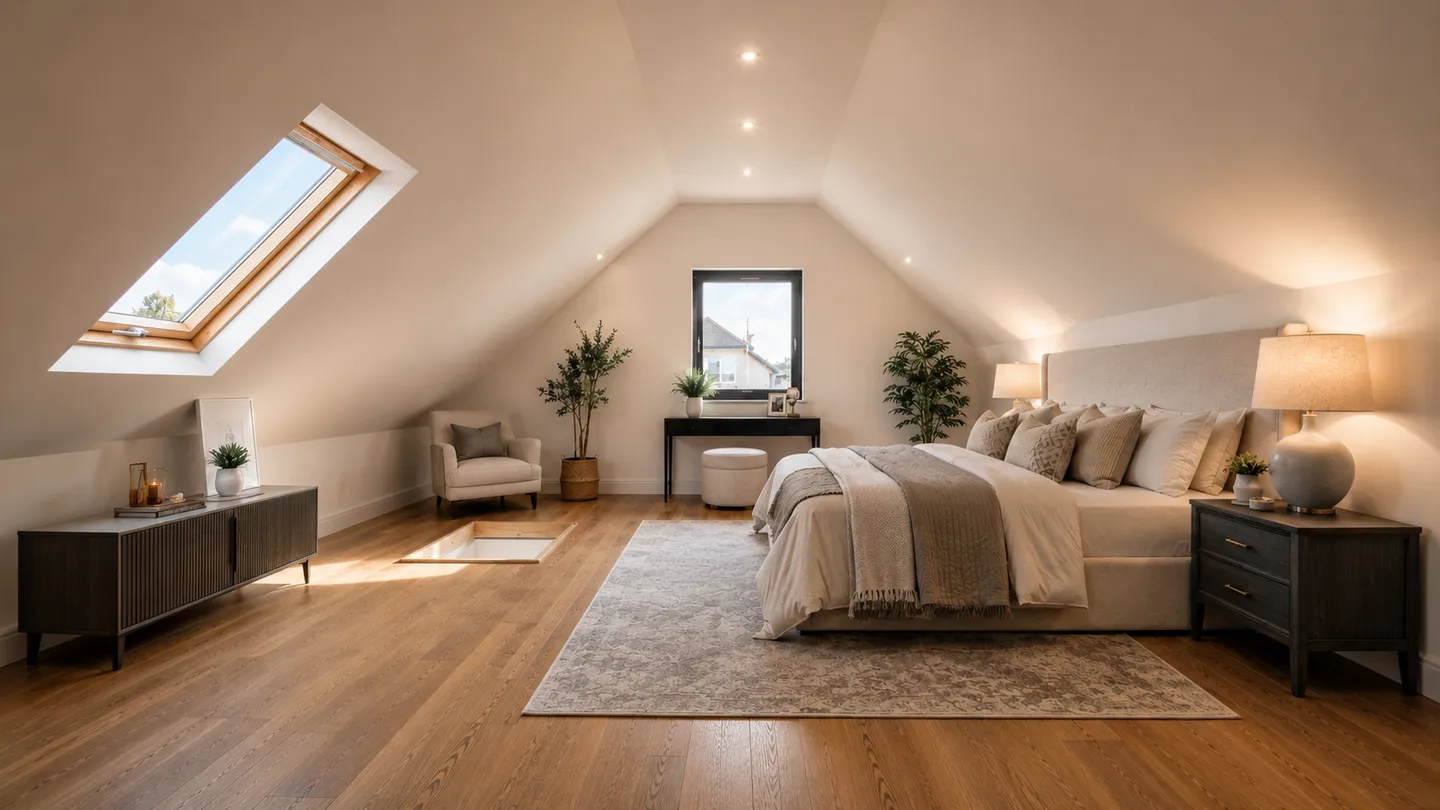
Does an attic conversion add value to your home?
It is one of the first questions Meath homeowners ask before they commit to the work, and it is a fair one. An attic conversion is a significant investment, so it is reasonable to want to know whether that money comes back when you sell. The short answer is that a well-done conversion is commonly cited as one of the better-value home improvements you can make. The longer, more honest answer is that the figure varies a great deal, and that the way the room is finished and certified matters far more than most people expect.
Below we look at where the often-quoted value figures come from, why they are not a promise, and the single most important distinction that decides whether your new room counts on paper: whether it is a certified habitable room or not.
Where the “15 to 20 percent” figure comes from
You will frequently see attic conversions described as adding somewhere in the region of 15 to 20 percent to a property’s value. That range gets repeated because, in a lot of cases, converting otherwise dead roof space into usable living area is a relatively efficient way to gain square metres without extending the footprint of the house. You are using volume you already own.
It is important to treat those numbers as general industry observations rather than a guarantee for your specific home. The actual uplift depends on several things working together:
- The base value of the property. A percentage uplift on a higher-value home is a larger sum, but the percentage itself can differ.
- The local market. Demand in your part of Meath, and what comparable homes nearby have sold for, sets the ceiling.
- The quality of the finish. A bright, well-insulated, properly lit room reads very differently to a buyer than a cramped, awkward loft.
- What the room can legitimately be called. This is the big one, and it deserves its own section.
So when you read a value range, take it as a sign that attic conversions tend to perform well as improvements, not as a number you can bank on. Two identical-looking conversions can deliver very different returns depending on the points above.
The distinction that actually decides the value: habitable or not
Here is the part that catches people out. For a converted attic to count as an extra bedroom in a valuation or in a sale, it generally needs to be a certified habitable room. That means it has been designed and built to meet the relevant standards for things like floor-to-ceiling height over the required area, structural support, fire safety and means of escape, ventilation and natural light.
A space that does not meet those requirements can still be genuinely useful. Plenty of homeowners convert their attic into a study, a hobby room, a teenager’s hangout or extra storage, and they get real day-to-day benefit from it. But a non-habitable space adds usefulness, not the same paper value. It will not carry the weight of an additional bedroom when a valuer or a buyer’s surveyor assesses the property.
The honest rule of thumb: extra floor space adds comfort, but only a certified habitable room reliably adds the kind of value associated with an extra bedroom.
This is exactly why certification sits at the heart of how we approach every project. If the goal is to add value as well as space, the conversion has to be built and documented to the standard that lets it be described accurately.
Why selling a non-habitable room as a “bedroom” backfires
There is a tempting shortcut some sellers consider: list the converted attic as a bedroom and hope nobody looks too closely. It is a poor idea, and it tends to cost more than it gains.
When a buyer is interested, their surveyor will assess the property. If a room has been presented as a bedroom but does not meet habitable-room standards, that gap can surface at survey, often at the most sensitive point in the sale. The result can be a renegotiation, a loss of buyer confidence, or a deal that falls through entirely. You also risk the reputational and practical headache of a sale that unravels late.
Describing the room accurately from the start avoids all of that. An honest listing that calls a study a study, or that confidently calls a certified room a bedroom because it genuinely is one, protects both the sale and your standing as a seller.
How to make sure your conversion counts
If your aim is to add value rather than just space, a few things stack the odds in your favour:
- Plan for habitable standards from the outset. Retrofitting compliance after the fact is harder and more expensive than building to standard first time.
- Confirm the regulatory position early. Understanding what applies to your home before work starts saves grief later. Our guide to attic conversion planning permission in Ireland walks through what to check.
- Keep your paperwork. Certification and compliance documentation is what lets the room be presented honestly when you sell.
- Use a team that builds to certifiable standards. See how we manage this on our attic bedroom conversions page, and what to expect during our attic conversion process.
The bottom line for Meath homeowners
A good attic conversion is often a strong value improvement, with uplift commonly cited in the region of 15 to 20 percent, but that is a general observation, not a guarantee for any one home. The figure varies by property, by area and by finish. What is consistent is the underlying rule: only a certified habitable room counts as an extra bedroom in a valuation or sale, and presenting a non-habitable space as a bedroom tends to backfire at survey. Build it right, certify it properly, and describe it honestly, and you protect both the value and the sale.
If you are weighing up whether a conversion makes sense for your home, the best first step is an honest assessment of what your roof space can realistically become. Get in touch for a free, no-obligation assessment and we will tell you straight what is achievable and what it would mean for your home.