Why spray foam insulation can cause problems at mortgage and valuation stage
Spray foam insulation has been heavily marketed to Irish homeowners as a quick way to make a draughty attic warmer. In many cases it does raise comfort levels and lower heating bills. The problem is what can happen later, when you come to remortgage, release equity, or sell. Some lenders and surveyors now treat spray foam applied to the underside of a roof as a red flag, and that can affect a valuation or even hold up a sale.
This is not a reason to panic if you already have it. It is, however, a good reason to understand the issue before you spend money on an attic conversion or put your home on the market. Below is a measured look at what is going on and what your options are.
What spray foam actually does to a roof
There are two broad types. Open cell foam is softer and more vapour permeable. Closed cell foam is denser and acts as a vapour barrier. Both are commonly sprayed directly onto the underside of the roof rafters and onto the back of the roofing felt or sarking.
The concern that lenders and surveyors raise is twofold:
- It can trap moisture against the timbers. Roof timbers need to breathe. If warm, moist air from the house is held against cold rafters by a layer of foam, condensation can form where you cannot see it. Over time that may lead to damp or rot in the structural timbers.
- It makes the roof structure hard to inspect. Once foam is bonded to the rafters and felt, a surveyor cannot easily check the condition of the timbers or the felt underneath. If they cannot inspect it, they may not be able to confirm the roof is sound.
Because the surveyor cannot verify what is behind the foam, some will note it as a risk in their report. A cautious lender may then ask for a specialist report, reduce the valuation, or in some cases decline to lend until the position is clarified. This does not happen with every lender or on every property, but it happens often enough that it is worth taking seriously.
The core issue is not that spray foam is always harmful. It is that it can hide the very thing a surveyor needs to see, and uncertainty is what makes lenders cautious.
Why this matters if you plan to convert or sell
If you are thinking about an attic conversion, the roof structure is central to the whole project. A designer and engineer need to assess the existing rafters, check for any moisture issues, and work out how the new room will be insulated and ventilated. Foam already bonded to the rafters can get in the way of that assessment and may need to be dealt with before work begins.
If you are planning to sell, the risk is that a buyer’s surveyor flags the foam, the buyer’s lender hesitates, and the sale slows or falls through. Buyers who are paying cash may be less concerned, but you cannot rely on that. It is better to know where you stand before a viewer ever walks through the door.
What to do if you already have spray foam
The single most useful step is to get an independent assessment rather than guessing. A suitably qualified surveyor or structural engineer can establish:
- Which type of foam was used and how it was applied.
- Whether there is any sign of trapped moisture, damp, or timber decay.
- Whether the roof can still be adequately ventilated.
- What, if anything, needs to be done to satisfy a future lender or buyer.
In some cases the assessment will conclude the foam is causing no harm and simply needs documenting. In others, removal may be recommended so the timbers can be inspected and the roof can breathe again. Removal is a specialist job and can be involved, so it should be costed properly and never rushed into on the strength of a sales call. Keep any paperwork, guarantees, and assessment reports together, as a clear paper trail can reassure a lender far more than a verbal reassurance can.
How a properly designed attic conversion handles insulation
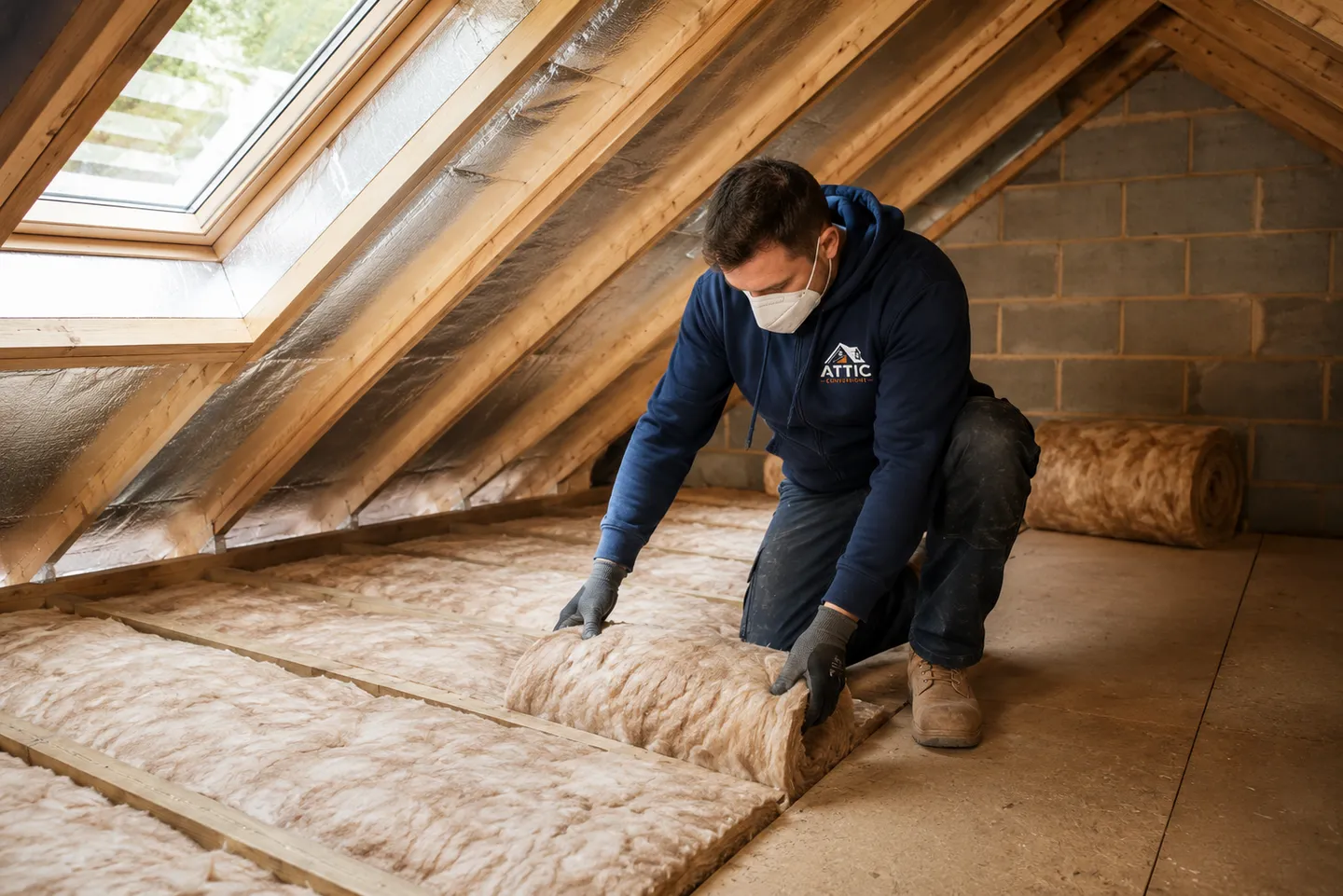
A well designed conversion does not rely on foam sprayed blindly onto the rafters. Instead, insulation is planned as part of the whole roof build up, so the structure stays sound and inspectable. In practice that usually means a combination of insulation between and below the rafters, with a deliberate ventilation gap kept above the insulation so air can still move behind the felt and carry moisture away.
Done this way, the build meets current building regulations for thermal performance, the timbers stay protected, and nothing is hidden that a future surveyor would need to see. Our guide to getting attic insulation right during a conversion explains the layers involved in more detail, and the broader attic conversion process shows how insulation, ventilation, and structure are designed together from the start rather than bolted on afterwards.
The contrast matters. Foam applied as a standalone upgrade can solve a comfort problem while quietly creating a mortgage problem. Insulation designed into a proper conversion solves the comfort problem and keeps the roof saleable.
The measured takeaway
Spray foam is not automatically a disaster, and many homes that have it will sell and remortgage without issue. But because some lenders and surveyors flag it, and because it can hide moisture and make the roof hard to inspect, it deserves careful thought before you convert or sell. Every roof is different, so you should seek professional advice on your specific situation rather than relying on general guidance alone.
If you are weighing up a conversion in Meath and are unsure how your existing attic stacks up, we can help you understand your options before you commit to anything. Get in touch for a free, no obligation attic assessment and we will give you an honest view of your roof, your insulation, and what a sound conversion would involve.